Lubricants that support operational safety
In the chemical industry, raw materials are chemically reacted into finished products. The entire industry has a wide range of products, including the production of organic and inorganic chemicals, plastics, synthetic fibers and rubber, and petrochemicals.
The processes used to complete the necessary chemical reactions typically involve extreme temperatures, volatile compounds, reactive chemicals, and reactive gases, making it difficult to maintain an effectively lubricated environment.
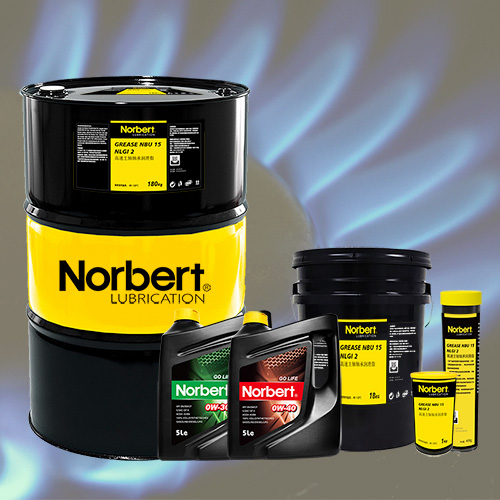
Due to its compatibility with polymers used in seals, O-rings and valves, and its ability to extend equipment life and reduce maintenance costs, Norbert ® lubricants are used in chemical valves, fans, pumps, motors, centrifuges, reactors and other components.
High quality Norbert ® synthetic perfluoropolyether (PFPE) based lubricants:
- No spontaneous combustion at temperatures up to 482ºC (900ºF) or pressures up to 350 bar
- Safe, non-reactive and non-flammable when used with active chemicals
- In highly corrosive environments, lubricity and stable viscosity can be maintained over a wide temperature range
- It is chemically and biologically inert and does not contain silicon
- It is not affected by acidic or alkaline cleaners, as well as disinfectants, steam, moisture, and high temperatures, and will not react under these conditions
- Maintain compatibility with chemicals commonly used in industry
- No volatile organic compounds (VOCs) or chlorine
High-performance lubricants ensure safety when exposed to reactive gases
Conventional greases containing mineral oils and some synthetic lubricants can react with oxygen or halogens such as chlorine, fluorine, and bromine, causing catastrophic accidents. When applied to reactive gases, lubricants that can prevent accidents and ensure safety are required.
While the potential for explosion, fire, lubricant deterioration and equipment failure is always present, the Norbert ® range of greases can help avoid the following problems:
- Nitrogen purge is required to keep incompatible lubricants below the explosive limit
- Expensive, bulky equipment with interlocking devices can malfunction
- Traditional lubricants pose the risk of automatic ignition during oxygen shock
- Lubrication system failure due to oxidation, chemical corrosion, or solvent attack
- Flammability and Volatility of Conventional Lubricant Base Oils
- Bearing failure caused by carbon deposition and coking
- Frequent addition of lubricating grease